Wednesday, September 13, 2006

Move.

Due to the inability of Blogger administration site to provide reliable service, I am forced to discontinue this blog and relocate it to:

http://forgivemyfrenchfilms.blogspirit.com/

I look forward to "seeing" you there.

Thursday, September 07, 2006

Henri-Georges Clouzot : ... marital trouble.

Clouzot’s work later ran into milder trouble. He was married, a common situation for a man. His wife was an actress, nothing out of the ordinary for a director, though she probably became one only when she married him.

Vera Clouzot was born Amado and Brazilian, but no born actress. She was able to make Orane Demazis, Pagnol’s long time life companion, look good.

« Le salaire de la peur » (1953) starts as the perfect movie pitch : four adventurers drive two truckloads of nitroglycerine over awful tracks through Central America to an oil field in order to stop a raging fire.

Today, the film looks as dated as « Le corbeau » is timeless : contrived stereotypes, tired tales of virile friendship, laughable tough guy dialogues, and a severe case of bad acting by Charles Vanel, whose survival skills -he died at ninety seven and nearly worked to the end- later made a French cinema icon ; a few more decades and he would have been a great, deaf, blind and mute actor.

The movie universe was purely male, but the Latin American location gave Clouzot the excuse he needed for a supporting part tailored to his wife : Brazil was in Latin America ; though her native language was Portuguese rather than Spanish, her accent would sound genuine enough to French ears ; despite her best efforts, she could not do much worse than Charles Vanel. This was sound reasoning and her role went mostly unnoticed.

In « Les diaboliques » (1954), Vera Clouzot starred next to Paul Meurisse and Simone Signoret. She was resolutely bad ; whether her presence hurt or benefited the film is nevertheless open to discussion.

The movie looks like a French ancestor to « Basic instinct » : it is no coincidence that « Diabolique » (1996), the US adaptation of the same Boileau-Narcejac novel -the duo of French writers also behind Hitchcock’s « Vertigo »-, starred Sharon Stone.

The film script is silly at best, while the love triangle of Paul Meurisse -husband-, Vera Clouzot -wife- and Simone Signoret -Meurisse’s mistress- makes very little psychological sense : you can understand that the two women want to get rid of him, never why they would marry him or become his lover.

Their triangle is nevertheless visually arresting : Paul Meurisse’s ghost-like, enigmatic Eurasian face and from beyond the grave voice, Simone Signoret’s deceiving air of physical and mental good health. As to Vera Clouzot, she acts so bad as to look plainly insane.

The overall effect is outright creepy, particularly as Clouzot directs the whole film down the same path and gives up on narration and rationality to focus on visual trickery.

The picture consequently veers from the thriller genre towards a horror movie of the « Scream » kind : too ridiculous and kitsch to be taken seriously, still able to shock and scare you against your better judgement.

One year after « Les diaboliques », Clouzot found a most elegant solution to his wife’s longing for acting : he turned to documentary filmmaking.

« Le mystère Picasso » (1955) may be the director’s best thriller film : thanks to the use of a particular type of ink, Picasso’s drawings appear directly on screen as the artist creates them.

The result is a breath-taking display of sudden plot twists, astonishing U-turns, unannounced direction switches, unpredictable endings, as Picasso abruptly changes his mind or heart, shifts his mood, erases a figure or the whole drawing, starts back from scratch or decides his work is complete and moves on to the next one.

Clouzot captures a process rarely or ever seen before on screen : art in the making. With a likely mix of awe and frustration, the director witnesses the painter’s creative freedoms, all that himself will never be allowed to do, or only at the script stage, before his vision is committed to celluloid : throw away a nearly finished work and start it all over again.

With barely veiled contempt for the filmmaker, many critics describe « Le mystère Picasso » as the work of a talented director about a genius.

Their contempt may be as short-sighted as their perspective on the film : fiction and Picasso have no monopoly on plot twists, many-layered tales and drawings ; documentary films too may achieve complexity and ambiguity and their screening accommodate various readings.

Watching Picasso at work is no doubt fascinating, but the film, by its very existence, also shows the artist’s close attention to maybe his most ambitious creation : his personal myth.

The movie silently exposes the painter‘s narcissism as, through the camera lens, Picasso actually watches himself in the act of painting. In the end, what do we see on screen ? Picasso painting ? or Picasso playing the part of Picasso painting ?

Does he not consciously overact -or rather « overpaint »- to show off and exaggerate his improvisation skills and the richness of his inspiration, and force upon the passive camera his ideal view of himself as a versatile God ?

Vera Clouzot died in 1960, of a heart attack, like in « Les diaboliques ». In the film, her character’s death resulted from Machiavellian -if unbelievable- plotting by husband Paul Meurisse.

In real life, Clouzot was not suspected. Maybe the director managed the perfect murder and killed his wife with the news that he would direct Brigitte Bardot in « La verité » (1960) and she would have no part in the movie. « La vérité » -the truth- is sometimes so hard and cruel that it breaks hearts.

At the time of her death, Vera Clouzot’s acting career amounted to three films, all by her husband.

Henri-Georges Clouzot : war fortunes and...


When war rages, opportunity may knock. On would-be filmmakers’ doors too.

During WW2, major directors fled Nazi-occupied France : Renoir, Clair, Duvivier.... Others stayed but were forbidden to work for all too clear reasons.

Life was nevertheless to go on and films to be made : so, many holes had to be filled.

Before the war, Henri-Georges Clouzot was a screenwriter. With war, he graduated to film direction.

His second movie created enormous turmoil, not because it was great.

« Le corbeau » (1943) portrays a provincial French town plagued with a mysterious « corbeau » : a crow or raven, and the French nickname for a writer of poison pen letters.

At a time when anonymous letters denounced Jews and underground fighters, it was difficult not to watch the film as a parable of Nazi-occupied France.

It was equally difficult to believe the film had been produced by Continental Films, a production company set up in Paris by the Germans and headed by Alfred Greven, a former UFA production manager, who had been appointed by Josef Goebbels.

To this day, what Continental Films was truly about and after remains of source of vigorous controversy and its story was the subject of Bertrand Tavernier's « Laissez-passer » (2002).

According to one school of thought, Alfred Greven was a film lover and an astute producer much more than a Nazi doll and pulled an impressive job : with a mix of charm and double talk, he both enticed the French film community to work with him and placated his Berlin masters’ desires for ideology-correct fare.

He may have skated on very thin ice and sometimes appeared to turn himself into a German « collaborationist », colluding with French filmmakers against his official mandate. As war wore on -and matters more pressing than French film production arose-, he seems to have convinced his running officers to grant him free rein.

Why « Le corbeau » escaped Nazi censorship and how Greven sold the project to Berlin became clear when the film was released in Germany as a picture of French moral baseness and decay.

Watched today, « Le corbeau » is an outstanding « film noir » : one of the darkest depictions ever of small town evil and meanness, with none of the ironic smile of Chabrol’s « La fleur du mal » and its comparatively harmless anonymous political tract to dilute them.

« Le corbeau » is a true psychological thriller and the precursor of modern day serial killer movies : Clouzot’s « corbeau » needs no gun or knife to murder, or injure forever, he does so with his pen and takes such pathological pleasure in it that the flow of letters cannot but grow to a fateful climax.

But « Le corbeau »’s victims are seldom innocent, this is where the film escapes all contemporary clichés and reassuring moral : he lays bare the town intimate and very real ugliness.

Though a screenwriter by trade, Clouzot did not write the film script or dialogues ; instead, he demonstrates a director’s true skills : the eye to tell a story with images and a talent with actors.

In the best « film noir » tradition, the movie black and white cinematography gives to see and feel evil at work and the town oppressive atmosphere.

As the outsider, newly arrived physician and first recipient of the letters, Pierre Fresnay gives another wonderfully restrained performance of elegant coolness, much closer to « Grand Illusion »’s « capitaine » de Boieldieu than to Pagnol’s Marius.

Just as Simenon’s Maigret is a « commissaire », but would have been a medical doctor, Fresnay’s Dr. Germain doubles as the investigator : the town is sick, it is case for a physician, rather than for the police.

As France was liberated, « Le corbeau » and those associated to the film became easy targets, if not stool pigeons and scapegoats. The movie drew a picture of France so dark that nobody could accept it at a time when the myth of a « resistant » country was being created.

Clouzot’s guilt was three-fold : he came out of the war in an better position than he had entered it ; he had run Continental Films’ screenwriting department ; he had shot a film of anti-French propaganda.

During two years and a half, Clouzot was blacklisted but remained free. Some were not so lucky : Pierre Fresnay and Ginette Leclerc, her partner in « Le corbeau », went to jail.

But, while the supply of food and commodities eventually returned to normal, talent remained scarce : the director and his actors ultimately resumed their careers.

The emperor's post scriptum : "Fat is beautiful".

Africa was the fabled land of wildlife documentary filmmaking.

Then, Jacques-Yves Cousteau and Louis Malle took us underwater to « the world of silence » (« Le monde du silence »-1955).

Half a century later, « La marche de l’empereur »’s producers hit box office gold in Antartica.

Africa’s wildlife was, well, wild : a beautiful, but cruel and violent world. The lion king seems to doze lazily in the high grass, yet danger is looming. A sudden flash of R-rated action and there goes the elegant antelope. The king’s family briefly dines then returns to sleep ; garbage men move in : hyenas and vultures feast on leftovers. A dangerous world indeed.

On the ice-fields of Antartica, what do we see ? Penguins. What do they do ? Based on the film title, they walk. Based on screen evidence, they mostly stand still. Action ? An egg is laid. Dangers ? Cold, wind and the odd visit of a silly bird with a ridiculous Cyrano beak which clumsily attempts at hijacking and killing a couple of newly born ; despite the soundtrack full blown efforts -voice over and music together- to dramatise the sequence, it looks rather like a Mack Sennett short film.

In front of African wildlife, powerful lions, lean and mean leopards, greedy ugly vultures, we feel totally out of place and inadequate. Crocodiles are vicious, rhinoceroses scary, hippopotamuses an enigma. Giraffes seem nice, but awkward. However intimidating, the big friendly looking elephant is the only true crowd favourite.

Watching penguins on their ice field, our sense of inadequacy subsides, we feel no inferiority complex. They are so much like us, obviously ill-equipped, if not physically challenged : they cannot fly and barely walk ; they swim wonderfully, but the film only shows glimpses of them in their favourite environment not to hurt our self-esteem.

We are tired of gorgeous looking stars and overachievers, we crave for common place heroes : penguins.

The film was said to be a success in the US for its worship of conservative family values. The truth runs deeper : the whole film whispers a message which may not be said aloud, though each picture frame shouts it at us : fat is beautiful.

The film penguins are so overweight their celebrated walk displays the rolling gait of an obese drunk.

Fat is beautiful. Without fat, the cold kills you ; without fat, you do not survive when food becomes scarce ; without fat, you cannot feed your baby and your baby dies.

The film penguins do not discuss earth warming ; they probably refuse to believe in it : they would need fewer calories to beat the cold.

Building fat is your duty in life, obesity is heroic : proof of your commitment to your family.

The film moral is ice field clear : obese people are our penguins : undervalued, humble, hard-eating caloric overachievers.

It is also theatre owner friendly : food shortage may strike at any time, rush to the concession counter for a giant bucket of pop corn, add a spare one for good measure ; keep up the good work during feature film presentation : eat as much as you can as you watch your penguins siblings.

Jean Girault : ... oblivion in outer space.

In the battle to mine De Funès gold, Jean Girault initially seemed to have the edge. Despite the « gendarme » franchise, he somehow lost it.

De Funès’s higher profile films and biggest box office hits were with Gérard Oury : « Le corniaud » (1965), « La grande vadrouille » (1966).

Jean Girault’s winning formula was De Funés’s and a supporting cast, Oury’s the odd couple : with Bourvil first, then with Yves Montand in « La folie des grandeurs » (1971), a half-successful period comedy loosely based on Victor Hugo’s « Ruy Blas », eventually with himself : in « Les aventures de Rabbi Jacob » (1973), De Funès plays a prejudiced French business man forced to impersonate a US rabbi.

It is true that Gérard Oury’s first association with De Funès came before « Pouic-Pouic », but in « Le crime ne paie pas » (1961), De Funès was, as usual then, far from the top of the bill.

To compensate for his favourite actor’s increasing unavailability, Jean Girault tried his hand at a younger and sillier brand of humour. He had taken « Le gendarme » to New York, he took « Les charlots » to « Spain » (« Les charlots font l’Espagne » - 1972). Maybe he had a gift for foreign languages.

« Les Charlots » were a short-lived, musical then screen sensation of the lowest order. Though Jean Girault took them to Spain, their fame never crossed French borders. They were the conscious parody of a very distant French answer to British pop groups : the Dumb Four.

Their success remains a mystery to which I am a party. I never was a fan of them, did not enjoy their music, I nevertheless watched most of their films. Why ? I could not say. Maybe, all kids are rabid image eaters : they sort them out later.

Claude Zidi’s was « Les Charlots »’s appointed director. Later in the 1970’s, he got more than even with Girault : he borrowed De Funès for two films.

« L’aile ou la cuisse » (1976) simultaneously played the odd couple and crossover cards. Zidi partnered De Funès with comic boy wonder Coluche, as immensely popular as him and a genuine major leaguer, unlike « Les charlots ». Film topic was as consensual as can be imagined in France : food. De Funès played a food critic who loses all sense of taste and goes to his estranged part-time clown son Coluche for help. Film was a -public- success.

« La Zizanie » (1978) was « L’aile ou la cuisse » perfect opposite. The movie subject was the most divisive of all : politics, though with a fashionable ecological background. De Funès was married to Annie Girardot, it was no happy marriage. Zidi aimed again for a winsome odd couple, he got the wrong one : fire plus fire ; overacting and overacting ; his funny, hers not -or accidentally in other films supposed to be dramas.

Film was a flop. This was no doubt sweet vindication for Claude Gensac.

Maybe its failure also lived up to the promise of its title and bred « zizanie » -discord- between Zidi and De Funès.

In 1978, Jean Girault seemed to have lost the De Funès wars for good : their last film together was 1971 « Jo ». In 1979, the director unexpectedly rebounded : for four years and four films, Girault and De Funès would work exclusively with each other.

« Le gendarme et les extraterrestres » (1979) and « Le gendarme et les gendarmettes » (1982) were too sad efforts by ageing men to rejuvenate a dying franchise and demonstrate they remained finely tuned to their times : in the first one, De Funès faced aliens, in the latter one, female colleagues ; both encounters were scary and no fun.

« L’avare » (1979), based on Molière’s classic play of a man in love with his « cassette » -money box- was a naive and doomed shot at critical recognition.

« La soupe aux choux » (1981) was a misguided screen adaptation of a popular novel, involving again a visitor from outer space, with a weak spot for cabbage soup.

De Funès is often described as a great actor in mediocre films. This is unfair. The actor is good because the films are mediocre, the films are mediocre to give him every opportunity to be good.
De Funès films are concertos written for a solo player. At regular intervals, the orchestra stops to play and leaves the virtuoso alone to show off his technique and engage into his madness. The work balance is shattered, but the star shines and the crowd loves it as much as in the golden age of Bel Canto, when the operas librettos served only as pretext to vocal performance.

Erotic cinema scripts laboriously plod between sex scenes, Jean Girault movies stumble from De Funès antics to more De Funès antics. Filmed sex amateurs are fair enough not to complain about story gaps.

Four De Funès films in four years was too much for Jean Girault. He died while shooting « Le gendarme et les gendarmettes » : of exhaustion ? too much pleasure ? overwhelmed by the true mediocrity of what would be his last film ?

Maybe the aliens from « Le gendarme et les extraterrestres » and « La soupe aux choux » grew so fond of him and his films they returned and took him home with them.

His partner in filmmaking did not survive him long. Louis De Funès died in 1983, twenty years after « Pouic-Pouic ». « Le gendarme et les gendarmettes » was his last film too. A sad ending, unless he too was taken away by aliens to a distant planet and reunited with Girault for a local remake of the « gendarme » franchise.

If so, Claude Gensac was left behind and unconsoled : « Le gendarme et les gendarmettes » was not her last film, but she has since come out of mourning in only three movies.

Jean Girault : De Funès or...


Jean Girault is such a common French name that it could be the local Alan Smithee : the alias a US director uses when he chooses to dissociate himself from his film (Alan Smithee, i.e. « the alias men »).

Some, watching Jean Girault’s films, may even agree that a sensible director would disown them.

But there is no French Alan Smithee. « Droit d’auteur » protects French filmmakers better than copyright law does their US colleagues : they have final cut and imprescriptible moral rights.

This is no guarantee against a truly bad film, but it means you cannot wash your hands, and name, of your mistakes.

Besides, among the many French Jean Girault, one did direct films. All are not be memorable, some were very successful. But, rather than as Jean Girault films, they are known as Louis De Funès movies.

Jean Girault directed eleven films with the comic actor. And twenty without him, best forgotten.

The director and the actor first paired on « Pouic-Pouic » (1963). Most of De Funès’s career was already behind him, but he best was fortunately still to come : he had played in close to one hundred films, but except in a handful of them, only cameos.

As the saying goes : you can make a killing in movies, you cannot make a living. For thirty years, the latter was dangerously close to true for De Funès ; as to a killing, in his dreams only.

« Pouic-Pouic »’s script revolved around a piece of land which was, or was not, oil rich. That was the question and probably a metaphor for the quest Girault and De Funès had just embarked on together : to find the elusive story that would bring them fame and fortune.

On that road, « Pouic Pouic » was no home run, but at least a single : De Funès topped the cast and was free to grimace and rage at will.

The home run happened one year later : home and the oil field were in Saint-Tropez : « Le gendarme de Saint Tropez » (1964) was a popular triumph and a long-awaited gift for De Funès’s fiftieth and Girault’s fortieth birthdays.

« Maréchal-des-logis » -sergeant, or about...- Cruchot (De Funès) is transferred to party happy and morally loose Saint Tropez, nearly ten years after Vadim introduced the Côte d’Azur resort to international screen fame, while creating woman and Bardot.

Cruchot’s teenage daughter, Nicole, gets mixed up with a gang of art robbers, but eventually helps her father and his colleagues arrest the ring.

Pretty thin story line for a killing, even for a living ? Rationale for success laid elsewhere.
French « Gendarmerie » -military police in charge of rural areas and small towns- was popular, much more so than its civil counterpart left to care for the bigger cities.

By mocking it gently, the film also catered for the French anarchist streak, while the main actors wore uniforms at a time when a general had been elected head of state.

As its title clearly states, the film is not about an ensemble cast forming the « brigade de gendarmerie » -the MP outpost- but about De Funès and a supporting cast headed by Michel Galabru -another long struggling comic actor-, who plays « adjudant » Gerber : « Le gendarme de Saint-Tropez », not « Les gendarmes de Saint-Tropez » ; all titles in the series will use the singular mode.

« Adjudant » Gerber, not « maréchal-des-logis » Cruchot, heads the « brigade » : Cruchot is middle management and the film core target French individualistic middle class.

Through Cruchot’s daughter, Nicole, the movie also lightly addresses the fast widening generation divide that will lead to the student revolts of 1968.

Set in Saint-Tropez, it allows its public to glimpse and laugh at a privileged set and a way of -easy- life it both envies and spurns.

From the start, « Le gendarme » franchise appealed to a conservative crowd.

Two years later, Jean Girault took his « gendarme » to New York (« Le gendarme à New York » - 1966), as if crossing the pond, even only for shooting purposes, was a sure measure of success for French artists.

Two more years and, while French students rioted and Godard, Truffaut and others stopped the film festival in nearby Cannes, « Le gendarme » got married (« Le gendarme se marie »- 1968) : Cruchot needed no prior divorce and did not turn bigamist, he was a widower.

The lucky spouse’s name was no surprise : Claude Gensac was De Funès’s wife in ten films ; in only eight, did she play another role.

Some actors fear to be cast forever as James Bond or Batman. Probably no feminist, Claude Gensac always appeared content to enter French film history as De Funès’s on screen wife. Real life Mrs De Funès did not seem to mind either.

Claude Gensac and Louis De Funès were the perfect couple : water and fire. She monitored her husband’s eruptions with quiet amusement and « bourgeois » aloofness and contributed her own brand of well-behaved, cool lunacy to their movies.

Thursday, August 31, 2006

Darwin was wrong. (2/2)

Change « La marche de l’empereur » soundtrack -voice over, music and songs-, you get a brand new film.

The movie various language versions may share penguins and ice on screen, and preciously little else.

Even the titles have different sub-texts.

In the original French title, « La marche de l’empereur », « empereur » is short for « manchot empereur », a particular type of penguin -for detailed information on penguins, watch the National Geographic rather than the film.

But, in France, an « empereur » is also a short Corsican with foul temper and stomach problems, who still looms large in the collective psyche. « La marche de l’empereur » therefore hints at battles, fortitude in the face of adversity and, considering the weather on screen, perhaps specifically at the retreat from Russia by Napoleon troops in the dead of winter : a military disaster of epic dimension as well as a showcase of courage and resilience.

Like the voice over comparing the penguins’ mating ritual to a « dance », the title also probably refers to Johan Strauss son’s « La marche de l’empereur » (1889), one of his more famous waltzes. If the filmmakers hoped to match the penguins’ footwork to Viennese dance music, they had the good sense to give up when faced with an obvious conflict of tempos.

In contrast to the French original, the film English international title, « The emperor’s journey » sounds trite and potentially misleading, were it not for the movie poster : in how many countries and languages is it clear than an « emperor » is a penguin ?

In the US, though a « manchot empereur » is indeed an « emperor penguin », the « emperor » was dropped altogether -because the name and related constitutional concept are less welcome than in France ?- and the film was released as « The march of the penguins », where « march » keeps alive the French title allusions to music -though nobody in the Strauss family wrote a « March of the penguins »- and the military.

But the film US distributor, Warner Independent Pictures, did much more than just delete an emperor from its title to « localise » the picture to North American taste.

Though the lyrics of the original songs were already in English -a clear sign that the producers consciously aimed their project at the global market- or because they were, as it made them painfully understandable to US audiences, an entirely new musical score was produced.

In addition, as it was translated to English, the film voice over seems to have undergone a substantial rewrite : its US version is trusted to Morgan Freeman alone rather than to a nuclear family trio.

It would be interesting, but even more tedious, to sit through all the foreign versions of the film and see how they differ from one another.

« Farce of the penguins » may soon offer a less time-consuming and hopefully more entertaining alternative. Film is said to be presently in production and described as a « mockumentary » and a « remake » of the original movie -using the same edited footage ?

The « farce » main narrator will be Samuel L. Jackson -Morgan Freeman’s mock alter ego ?-, as if only black actors can make justice to penguin stories ; « characters »’ voices will include Jason Alexander’s, James Belushi’s and Whoopi Goldberg’s.

Maybe this is « La marche de l’empreur » fate : to be endlessly remade and give birth to a new genre : the penguin film.

An admirer of Soviet-style filmmaking will thus create a lyrical ode to the supremacy of collective values and upbringing over bourgeois individualism and nuclear family selfishness and will do so without reediting any of the filmed sequences : nearly all shots show a herd of penguins, where even the more powerful zoom struggles to isolate one individual ; whenever a penguin loner is shown, he is on his way to death ; the penguin family is more a voice over fantasy than an on screen reality.

A sarcastic director, Chabrol ?- will see the penguins as they are actually filmed : rather than champion long distance walkers -Mao-Ze-Dong or Stakhanov style-, a flock of passive animals, sticking to the group heat and safety, scared into perpetual wait as any move could tip the precarious balance of their life toward the unknown.

Could it be that the filmed penguins were actually acting ? The length of the film credits confirms what its visual polish already pointed out : « La marche de l’empereur » was not shot by a couple of penguin enthusiasts stranded on the ice field with one camera and thousands of « manchots empereurs » ; it was a major production, a budget of « Titanic » proportion -and risk- by documentary standards.

The film voice over does not say if penguins are short-sighted, but it is unlikely that the movie substantial crew went unnoticed by them throughout the whole shoot.

How much did the filmmakers’ presence change the penguins’ behaviour ? Is the movie in fact a documentary soap where the characters on screen are constantly followed by cameras but pretend not to see them and self-consciously perform the act of acting as they would without them ?

In quanta physics, whether it is observed or not impacts a phenomenon outcome ; is it also true of penguins behaviourism ? Specialists in the field are welcome to answer.

Of the many men on the ice field, none appears in the film. Man’s absence on screen is as conspicuous as deceptive : the film has very little to do with penguins and plenty with him.
Penguins are nothing but serviceable body doubles.

We do not give a damn about them or their story. They are just a handy and endearing pretext to tell ours once more.

Penguin boy meets penguin girl, they have penguin kid ? No, the actual story line is even more stale : boy meets girl, they have kid.

Penguins interest us only to the extent that we can cut and paste our emotions, values, dreams and clichés on to them.

Animals are great, they cannot speak up and contradict the words we plant into their mouths or the thoughts we drill into their brains.

Cinema used to be able to stereotype minorities, but these good old days are gone : typecast an Italian as a New York mafioso and Little Italy will hire a real one who will prevent you from living long enough to regret your casting misstep.

« La marche de l’empereur » is to penguins what Flaherty’s « Nanook of the North » (1922) was to Eskimos : their official induction into mankind.

Penguins do not protest stereotyping yet, but animal activists will eventually take up their cause. Still, it will be a while before « la marche de l’empereur » is labelled « penguinophobic » and « the emperor’s journey » takes him to the first Penguin Pride Parade.

Until then, Darwin will remain wrong : man does not share one common ancestor with monkeys, but with penguins.

The emperor's walk to fame. (1/2)

Is it a documentary film or fiction ? Comedy drama, drama, « documentary-soap », romantic comedy, melodrama, edutainment ?

Movie identity papers and awards -including an Oscar- answer : documentary film. Why ? Because it is a live action movie without actors ? But, the actors are there, though not on screen : they are supposed to narrate the film, their voice over actually creates it.

Turn the sound off, « La marche de l’empereur » is a documentary film ; turn it on, your ears tell you you are watching fiction.

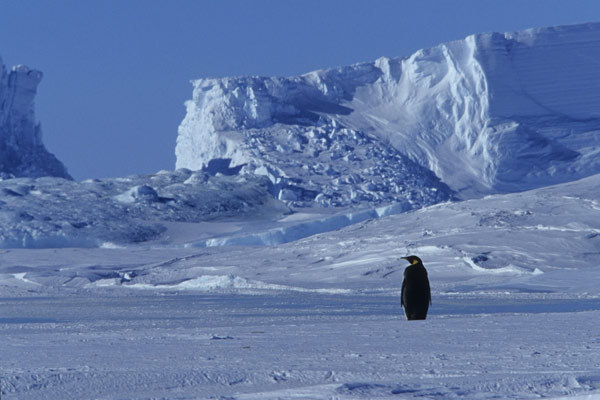
The film pictures are more stunningly beautiful than meaningful ; left to their own wits, they are unable to tell a story. However compelling, they remain mostly static and repetitive, symbolic rather than narrative, as when a maverick penguin is shot, dwarfed in the desolate white landscape.

They would make -and certainly did- for a beautiful pictorial book, but even editing adds them little narrative value : in the following shot, the maverick penguin is nowhere in sight, it has disappeared, drowned and digested by the ice field ; its fate is clear, but its story remains untold.
If the film were silent, each viewer would be inspired to invent his own stories or content himself with the pleasure of just watching.

« La marche de l’empereur » does not take the risk of such individual freedom. Voice over, music and lyrics join their forces and persuasion -if not coercion- power to tell us what to see on screen : penguin boy meets penguin girl, they have penguin kid.

The film is an outstanding, state of the art technical achievement that plays second string to storytelling of the lowest order.

« La marche de l’empereur » illustrates how much, in « documentary » films too, narrative skills today lag far behind technological prowess : as, in live action movies, breathtaking special effects are wasted to no end by laughable plots, footage which would have proved impossible to shoot a few years ago is misused to replay the most hackneyed story-line in the history of cinema and possibly mankind.

This is a full reversal from the first silent films, and later talkies, when technical limitations hindered narration. As if the history of cinema were technique playing catch up with storytelling, then overtaking it, and cinema were truly the art of the industrial age : technology provides all the innovations, while narration stays stuck in old grooves.

(Large format films remain the exception, as cumbersome, high-cost equipment and resulting shooting budgets still constrain their plots and scope.)

But who could blame the film producers -they would not give a damn, and rightly so- for choosing the most mainstream and profitable story among all those that could have been told ?

« La marche de l’empereur » French voice over alternatively shoots for epic grandeur -the awesome struggle for life of the penguin people- and intimacy -penguin family life-, and always for lofty poetry -Antartica sightseeing beauties-.

It ordinarily achieves second rate emotion and a scientific content close to nil.

As Mrs. Penguin, Romane Bohringer’s slightly plaintive tone follows the stream of the text pathos.

As Mr. Penguin and the main narrator, Charles Berling reins in his lines soapiness. His voice gives them a musical ring and plays them like a melody in free verse. His soft, gentle tone has a true storyteller’s quality and his words sound like a beautiful bed time story or a legendary tale disclosed around a camp fire -and sticks of grilled marshmallow- on a starry summer night.

Listening to him, the Antartica landscape and its ice walls sometimes look like not so distant cousins of Monument Valley cliffs.

His powers are nevertheless not limitless : when male and female penguins perform their awkward mating ritual and he tells us they are dancing, we remain sceptical ; if this is dancing, I am Fred Astaire.

When baby penguin is born and child actor Jules Sitruk -of Richard Berry’s « Moi, César 10 ans ½, 1m39 » fame and already, at 1m39, penguin good size- shares his character’s vision of the world, thoughts, fears and hopes with us, silliness takes over.

However, if film sounds as bad as it looks great, music is the number one culprit : a new age, pseudo symphonic mishmash, with English lyrics sung in a peevish voice, which would convince us it is spirituality-filled.

Constantly invading and redundant, struggling to force emotions on to the audience, it successfully caricatures film music at its worst.

The movie could nevertheless not do without it : several songs play like video clips within the film and extend its paper-thin story line to feature film length : « La marche de l’empereur » is officially 85 minute long, closer to 75 without titles and credits.

Chabrol's land : beware of black holes. (3/3)

As the end credits roll, questions rise to mind...

Have we not been tricked ? masterly misled to watch only the film lighter side ? Have we candidly fallen for the charming smiles of Tante Line and Michèle ? François’s aloof good looks ?

What have we truly seen on screen ? An ordinary upper-middle class French family, plagued with recurring bad luck and gossip, to which we have readily identified ? Or something much more sinister : an amiable, modern-day bourgeois version of the Greek Atrides ?

Two families, the Charpins and the Vasseurs, whose irrepressible lust for each other has created an incestuous and murderous clan ?

In its typical understated way, as if by accident, the film has unlocked many doors which we are free to push or not. In good « bourgeois » tradition, much is left unsaid : « you know full well everything here is a secret ».

One has been -supposedly ?- unveiled to us, how many more is it up to us to discover? The film ends ; a new, critical screening starts, in our heads.

When Anne’s husband and Gérard’s wife died in the same accident, how « intimate » was their relationship ? If it were « intimate », for how long had it been ?

Vice versa : at the time of the accident, what was the true relationship of their widow and widower, and future husband and wife ?

Film provides no birth details for François and Michèle, but the timing of their mother’s and father’s deaths as well as their apparent age suggest dark suspicions : whose son and daughter are they really ? Could they be half-brother and -sister, born of the same father ?

Have the Charpin-Vasseurs an uncanny talent to hide their family scandals under the rugs of their beautiful house ? Did their charming manners blind us with the director’s and screenwriters’ active help ?

After Gérard sexually harasses his stepdaughter -if she is nothing more to him-, is his death really one more unfortunate accident ? Is what we think we have witnessed on screen the truth ?

Gérard’s death is too timely and propitious not to be fully investigated : in the course of the film, he has progressively alienated himself from the rest of the family, which seemed ready to reject him by unanimous -if possibly untold- agreement.

Anne had good reason to resent her husband : he opposed her political ambitions and cheated her -though she did not know or pretended not to know.

François confessed to Michèle he had left for Chicago in good part to be rid of his father. He calls him a « salaud » -son of a bitch-, but no rational cause is given for his dislike -hatred ?-.

Long before the harassment scene, Michèle too has admitted to not liking Gérard. Again, no explanation is offered for her feeling : has Gérard harassed her before or is her mistrust purely instinctive and through no fault of his ?

Michèle and François suspect that Gérard has written the unsigned political tract ; again, no hard fact fuels such speculation.

As to Tante Line, she listens and observes in apparent neutrality : she does not badmouth Gérard but never utters a word in his defence.

Back to the original question : is Gérard’s welcome and final removal really accidental ? Here too, no hard fact, but a suspicion : Gérard’s death was less an accident than the performance of one more ritual, in a film replete with them.

Possibly the oldest ritual of all, neither French nor « bourgeois ». According to René Girard, all civilisations were based on it until the advent of Christianity : a human sacrifice, the killing of the scapegoat, whose individual « sins » were believed to be the cause of the community’s misfortunes and whose death would restore the clan, tribe, city, state... to its original order.

Is it ultimately what « La fleur du mal » is about and shows us ? that we cannot see only because we refuse to, as René Girard claims mankind has for ages ?

What is in a title ?

Is « La fleur du mal » a reminiscence of Baudelaire’s nearly eponymous book of poetry : « Les fleurs du mal » ? Of Orson Welles’s « Touch of evil » ?

Is it rather nothing but an abstract reference to the seductive powers of evil and its ability to create poisonous beauty ?

Or shall we look towards the very real and pretty flower-beds which surround the family house and to which lovely Tante Line tends with so much care ?

And, beyond the flower-beds, shall we take a very close look at Tante Line herself, as she confesses to killing her father and hints at an incestuous relationship -acted out or not ?- with her brother ?

Is she the actual « flower of evil », the original black hole from which stemmed all family misfortunes ?

If so, her tender relationship with the younger generation is nothing but evil lovingly and successfully grooming its next incarnation : as Michèle kills Gérard, Tante Line transfers her own « sins », i.e. family « doom », onto her shoulders, with François’s active support.

In such revisionist light, Gérard is only the fall guy ; a petty womaniser and social hypocrite, a self-indulgent picture of bourgeois moral shortcomings, he never has his chance : his small time, small town misdemeanours are not match for true evil.

Sandwiched between the elder and younger ones, the adult generation of Gérard and Anne, fully focused on her political campaign, like us, sees nothing coming, as « the flower of evil » is passed over from Tante Line’s parchment-like face to Michèle’s radiant youth, with the guarantee to bloom again : human sacrifices offer only temporary respite, they need to be endlessly re-enacted ; one day, the family shall expel a new scapegoat.

The film surrealist ending then makes perfect sense as the collective celebration of the immediate short term positive effects of the scapegoat’s killing : Anne is successfully elected and family harmony restored.

What is it, if not a happy end ?

Chabrol's land of honey and social hypocrisy. (2/3)


« La fleur du mal » is a wonderfully entertaining viewer’s guide to « us et coutumes » -way of life- of French bourgeoisie in the Bordeaux region : strongly suggested screening material for any potential visitor to Gironde.

Film is detail perfect, from Tante Line’s gardening straw hat to her battered, decades old « 2-CV », from the beautiful ivy -or is it vine ?- covered family mansion, its gravel path and flower beds, the Pilat -home, for trivia amateurs, to France highest sand dune- beach house down to the ugliness and cheapness of the new chemist’s store and pathology laboratory, the bareness of Anne’s campaign headquarters...

This is a film of rituals, many of them related to food, all the more evocative for reminding French viewers of similar occasions in their own life : the coming home lunch, Sundays formal dress and traditional « gigot » -leg of lamb-, the casual dinner of oysters and sole at a friendly Pilat inn, morning coffee and croissants in the veranda overlooking the sandy beach, Tante Line rushing to make the dishes as soon as she arrives at the beach house.

Chabrol’s characters show a sensual appreciation of all the earthly pleasures to which their material well-being entitles them : for one hundred minutes, the Charpin-Vasseur invite us to share a « bourgeois art de vivre » honed for generations, which they practise without a hint of self-consciousness, like they would carry a second skin.

Despite the dirty family laundry exposed in the heinous -and no doubt libellous- tract, they seem so nice and unaffected, particularly Tante Line and the young ones, that we cannot resent their privileged position and gladly accept both that they deserve it and their invitation.

To add to our viewing pleasure, this idyllic background is matched by a constant streak of irony, if not cynicism. Ann‘s and her campaign organiser’s visit to a social housing unit is an anthology piece : as Matthieu Lartigue wryly comments, « to be late for the visit of a low rent estate is the mortal sin of political campaigning » ; Chabrol portrays his working class characters with the same sharpness and accuracy as his « bourgeois », without a trace of caricature or patronising.

Each scene in the film elicits the same small smile usually displayed by Chabrol in life and Bernard Le Coq on screen : a womaniser -another ritual, perhaps less harmless-, Gérard is above all a master of « social hypocrisy », who welcomes Lartigue with open arms seconds after saying how much he loathes him.

In that instance, the director surely approves of his character : Chabrol is a confessed admirer of all the petty lies that make social -and family- life endurable and daily keep us from going at each other’s throats.

He may feel differently about what lurks far below the lying smiles, the beautiful house, the elegance and perfect taste of its inhabitants, among the deeply buried family secrets and taboos : true evil, waiting patiently to bloom again...

« La fleur du mal » is not a masterpiece, or of the intimate kind, like a small Dutch canvas painting the interior of a bourgeois home : deceptively low key and flawless. Chabrol’s film achieves all that it sets out to do and even exceeds its promises. Amazing by contemporary cinema standards, it is Chabrol’s fiftieth film.

After fifty films, Chabrol is a master craftsman : self confident enough to underplay his hand. His is bourgeois filmmaking of the highest order : understated, like his characters ; nothing obvious or showy, a constant light touch.

Fully committed to his story, he nevertheless takes a step backward so that his sharp eye and critical mind can observe it and his characters at a slight distance and leaves enough space in the frame to allow -and suggest- us to act likewise.

A great director is also a great coach ; in fifty films, Chabrol has learnt to surround himself with a devoted and talented team. « La fleur du mal » moves forward with quiet fluidity : director, crew, actors share a common vision.

The picture is wonderfully cast : no character or actor stands out ; as its poster suggests, it is a film of equals. Same is true among technical departments : cinematography, sound, sets, music... All the facets of filmmaking are harmoniously balanced.

Chabrol is a fair master, but this is a family film, on and off screen. His two sons deserve special mention. Matthieu Chabrol’s musical score is as insinuating as his father’s camera work ; never redundant, it evokes Bernard Herrmann’s compositions for Hitchcock films. As to Thomas Chabrol’s Lartigue, he is close to cynical perfection.

After fifty movies, Chabrol’s lust for filmmaking is impressive : « La fleur du mal » is anything but a run-of-the-mill work.

It is also lust, displayed by tipsy Gérard for his stepdaughter Michèle, which causes history to stutter and « La fleur du mal » to bloom again.

For one moment, it looks like the film may end with an unbecoming bang but, when drama strikes, Chabrol keeps his cool self : rather than stirring up a fire, he smothers the flames with Tante Line’s expert support and soothing voice.

The film ends less than it fades away into unresolved ambiguity : the Charpin-Vasseurs have just entered a new cycle in their troubled history.

In a surrealist and mute closing sequence, social hypocrisy and pure evil converge to celebrate a murder.

This is also an opening which brings the viewers face to face with the film black holes. As the end credits roll, questions rise to mind...

"La fleur du mal" : excursion to Chabrol's land. (1/3)


Some films are slices of life, Hitchcock’s were slices of cake.

Chabrol’s « La fleur du mal » -The flower of evil ; (2002)- is a full meal : oysters, « filets de lamproie » -lamprey- or sole, « gigot », « tarte » ; whisky, white wine and brandy.

Film opens on a long, masterly tracking shot : we enter a large manor house, pass by a dining room where the table is being set, walk upstairs ; a young woman is crying in a room, a man’s corpse is lying next door ; a sentimental standard of the 1930’s or 1940’s plays in the background.

Cut to an Air France plane.

François (Benoit Magimel), early twenties, is coming home from Chicago where he was studying. He is welcomed by his father, Gérard (Bernard Le Coq), who drives him back to the family home in a small town near Bordeaux.

The car parks in front of a manor house, which we recognise from the opening shot. A remake of the opening shot takes us inside, but goes no further than the dining room.

The table is set for the return of the family son and for Chabrol to spin his web.

We are introduced to lovely elderly Tante Line (Suzanne Flon), equally lovely but much younger Michèle (Mélanie Doutey), finally to smart and elegant Anne (Nathalie Baye).

We are delighted : all these people seem endearing and charming : the ideal upper-middle class French family. Except that François calls Anne « Belle Maman » - Stepmum- rather than « Maman » -Mum- and his relationship with Michèle seems more intimate than would become brother-sister love.

The recomposed - but how ?- family sits for lunch. François’s return is cause for celebration : white cloth, silverware, crystal glasses. Tante Line has arranged it all with the help of Marthe, the housekeeper ; she has also cooked François’s favourite dish, « lamproie », plus a « tarte » ; his father contributes a bottle of excellent white wine to the occasion.

Like in the car between François and his father, there is a good deal of idle talk ; Gérard proffers « clichés » about the US and their food habits, but his son warns him : « Les Américains sont moins cons qu’ils veulent le paraître » -Americans are less dumb than they wish to seem.

Viewers beware : when clichés are uttered in a Chabrol film, they do not inform us about the director’s own thoughts, but about the character who states them.

Likewise, idle talk, harmless comments, private jokes and obscure remarks need to be closely monitored : we do not want to fall too easily for the characters’ winning charm.

As he waited for his son at the airport, Gérard parked on a « disabled only » space : he had tricked his way to an official badge for the right to do so.

Despite Gérard’s constant smile, some tension seemed to build up between father and son in the car.

A chemist -like Chabrol’s own father-, Gérard hinted, when pointing to his new store and adjacent pathology laboratory to his son, that he had cut a few administrative corners to build them.

A lot of additional information is effortlessly and playfully passed to us around the table.

As she jokingly scolds Gérard for telling François there will be « lamproie » for lunch, Tante Line says with her sweetest smile : « Tu sais bien qu’ici, tout est un secret » - You know full well everything here is a secret.

Anne is running for the local elections against her husband’s better advice. The more they smile at each other, the more they seem tense.

The family moves to the winter garden for coffee. Anne’s campaign organiser, Lartigue -first name Matthieu, like Chabrol’s son who composed the film musical score, but the part is played by his brother, Thomas- pays a visit. He is upset by an unsigned political tract ; Anne reads it aloud : the tract stirs the mud in the troubled and troubling past of the Charpin-Vasseur family.
Pierre Charpin, a collaborationist, was murdered at the end of WW2 ; rumour accused his daughter, Tante Line, who was cleared in court.

The Charpin-Vasseur family faced other unfortunate dramas. The latest occurred a little over twenty years ago : Anne‘s husband and Gérard‘s wife died together in an accident ; then, as the tract puts it, « the widow married the widower ».

For Gérard, the tract is additional evidence that Anne should stay away from politics ; for his wife, mere gossip and more reason to fight.

Introduction is over. The film can now unfold the plot and sub-plots of a, very likely, excellent script -to know for sure, one need read it- by Caroline Eliacheff, Louise Lambrichs and Chabrol, with an appealing mix of understated elegance and ruthless efficiency.

Each scene is both a pleasure to watch and a narrative step forward ; the film pulls the impossible trick to wander around in a straight line.

Saturday, August 26, 2006

Melville over Roger Duchesne.


« Le cercle rouge » (1970) opens on a quote from no less than Krishna : « When men, even who do not know each other, are meant to meet some day, no matter what may happen to each of them and how diverging their paths may seem, on the set date, they will all stand within the red circle. »
All is said. The quote reads like the film programme. From the first frame, Melville apparently gives up any idea of surprise : he tells us where the characters will end, though not how.
Throughout the movie, Montand and Delon look positively dazed, as if they, too, have read Krishna’s quote : hares again, frozen in car lights, foreseeing fateful turtles.

They seem to flash forward to their tragic end and be so hypnotised by their vision that they lose any wish to try and alter the course of events.

Melville’s cinema illustrates the physical laws of gravity : all characters fall together, at the same slow but irresistible speed. There are no winners, barely survivors : Bourvil’s commissaire Mattei comes out alive, but even more impotent, from « Le cercle rouge » : as he presumes to challenge Fate, his very actions turn against him and move all protagonists closer to Krishna’s circle.

There is no trace of humour or irony in a Melville film. Contrary to a Chabrol’s movie, a Melville picture is to be taken at face value ; there is no double reading, no retreat option, no tongue in cheek. Everything is dead serious.

Melville's films are first line soldiers : they march to the enemy at even pace under canon fire, their step never falters in the face of apparently certain critical and box office deaths ; they quietly defy all odds.

The director’s austere panache and total solidarity with his films win our respect, while their hieratic and solemn style proves contagious and makes their watch compelling.

While Melville uses his characters as clay which he models to his fateful ends, they lose their flesh and blood reality and become abstract figures of human condition, in the hands of Krishna, Melville and other cruel gods.

In « Le cercle rouge », laconic dialogues, under-acting verging on non-acting, colour film used to black and white effect, the bare geometry of the plot and visual treatment of natural and studio locations transform the movie as a whole into an abstraction : a minimalist picture where Melville draws his characters’ itineraries to the red circle.

Of all Meville’s U.F.O., « Bob le flambeur » is possibly the most disconcerting ; the first of his crime movies, his disparate elements have not seamlessly merged into the director’s unique formula yet.

But something else is amiss. We fail to grasp what, until we trace a similar sensation back to such films as Renoir’s « The river » or several Michael Powell works : no familiar faces.

« Bob le Flambeur » demonstrates by default what « carrying a film » means. « Le doulos »’s cast includes Jean-Paul Belmondo and Serge Reggiani, « Le samourai » (1967)’s Alain Delon, « Le cercle rouge »’s Delon, Bourvil, Montand.

Names and faces we can hold on to while we get our bearings in Melville’s uncharted universe.

In « Bob le flambeur », we are wrecked men in the middle of an unknown ocean, without a lifebuoy or a compass. Instead we have Roger Duchesne, Daniel Cauchy, Isabelle Corey, Guy Decomble.

Who are they ? Should we trust them ? Is there any chance they can see us safely to shore and a good movie, when they seem unable to elevate their on screen characters above third rate stereotypes ?

Some list « Wagon Master » (1950) among John Ford’s great western films. But John Wayne is missing, Henry Fonda and James Stewart too, even Victor Mature is not there. Ben Johnson, Harry Carey Jr and Ward Bond stand in their boots : substitutes from the bench, supporting actors promoted leading men, they are unable to fill them ; by failing to « carry the film », they demonstrate how invaluable a true star is.

In « Bob le flambeur », the entire bearing wall of acting is crumbling, yet the movie does not collapse. Who but Jean-Pierre Melville can claim to have made a good film starring Roger Duchesne ?

Jean-Pierre Melville' s U.F.O.

Like Hitchcock, Jean-Pierre Melville hated film shoots. Both were control freaks. Principal photography was when things could go wrong.

Until shooting started, the ideal film existed in their head, its nearly perfect clone, scripted and storyboarded, on paper.
In Jean-Pierre Melville’s universe, the director casts himself as Fate.

With principal photography, his universe meets the physical world. They must collide or there will be no film.

If they do not collide as per the director’s calculation, Melville’s minutely plotted tale will be derailed : the collision will bear another movie than the one the director envisioned.
As camera starts rolling, Fate turns vulnerable to the accidents and hazards of human life. Worse, the demiurge has to share and partially trust his perfect film to mortals : actors, crew, even producers.

« L’enfer, c’est les autres » - Hell, that’s the others - : in few places is Sartre’s statement more true than on a film set. Day after day, take after take, the director has to communicate, sell or force his vision to others, he must explain, cajole, convince, negotiate, lie, bully, threaten to get his way, make with his actors’ limited talent, technical failures, budget restrictions.

If this is not enough to humble his artistic integrity to a compromise, then « force majeure » and an act of God himself will strike down his own omnipotence.

It is impossible to know how much Melville’s completed films differ from his original vision. How a perfect clone of it would have been received is equally impossible to tell.

As they are and we watch them, Melville’s films are U.F.O. : unidentified film objects.

Sometimes for too obvious reasons : in « Léon Morin Prêtre » (1961), Jean-Paul Belmondo stars as a priest.

But Melville’s acclaimed crime movies, too, are an unlikely cocktail, never tasted before or since : American B series and « film noir », French « nanar » -B series, or below, French film, corny but able to vie for cult status-, pulp fiction, Zen and Japanese minimalism, ancient Greek tragedy...

In front of a Melville movie, one no longer knows where he is, ignores if he has travelled backward or forward in time, is only aware never to have met a similar experience on screen.

In « Bob le flambeur » (1955), the bad boys folklore, slang and « clichés » seem so tired that the film might be a parody, but the characters’ « gravitas » and seriousness win us over and we stay glued to our chair : it should be grotesque, but we have lost any desire to laugh ; Melville’s world has engulfed us into its black hole.

The actors utter their tough boys’ corny dialogues with the solemnity of Holy Scriptures, they recite them in a priestly voice so flat and out of tune that the film transcends the usual standards of artistic achievement to turn itself into a vanguard experience.

An odd on screen mix of absurdity play and atonal music, the movie also blends naturalism and utter artificiality, as it moves back and forth between shots of Pigalle and Montmartre at night and Bob’s apartment, an overstatement, like his wardrobe, in bad taste.

« Le doulos » (1962) opening sequence similarly disrupts any sense of time and place : Paris suburbs look like a post-nuclear landscape straight from an Enki Bilal comic book.

Melville’s crime movies advance to their fateful end with deliberate slowness. They play like an accident in slow motion : there is plenty of time to see it coming, but no way to prevent it ; the resulting effect of overwhelming impotence is mesmerising.

While thrillers traditionally speed through their convoluted plots to deceive their viewers’ attention and stay one narrative twist ahead, Melville quietly arranges « Le doulos » intricate story pattern in front of his public and nevertheless manages to fool it.

Melville is a « faux lent » director : apparently slow walking, but keeping his pace and never stopping ; like Lafontaine’s fabled turtle, he easily beats his overconfident watching hares to his films finish line.

Wednesday, August 23, 2006

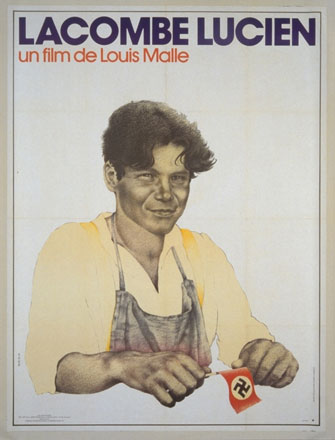
Lacombe Lucien, a.k.a. Blaise Pierre.

« Lacombe, Lucien » and Lucien Lacombe both owe a lot to Blaise, Pierre.

Pierre Blaise is an accidental actor like Lucien is an accidental collaborationist. Like Lucien too, he is a farm boy, from Moissac in Tarn-et-Garonne, where Louis Malle found him.

Pierre Blaise bears the same relationship to cinema as Lucien to « Collaboration » : a glamorous, possibly treacherous, universe to which he is unprepared.

Blaise’s thick South Western accent is Malle’s touch of genius. The character’s very voice vouches for his authenticity : bad or good, generous or cruel, as long as he remains faithful to his accent, Lucien is genuine, anything but a fake or a hypocrite.

It is an effective strategy to film world history at grass root level. Even more so with WW2 : after being submitted, willy-nilly, to so much fiction and facts about the period, any fresh perspective is welcome.

With « Lacombe Lucien », Louis Malle follows the same path, in the field of fiction, as historians who immerse themselves into local data to see WW2 through they eyes of a small community or unheralded participants.

Film was shot in the French region of Quercy, where Malle had a home, mostly in the town of Figeac (Lot), with additional filming in Arcambal (Lot) and Montauban (Tarn-et-Garonne).

The film locations offer a striking counterpoint to the global conflict. WW2 belongs in, « stricto sensu », another, possibly fantasy, world : invisible and accessible only through creaky radio programmes, it sometimes sounds less real than Orson Welles’s broadcast version of H.G. Wells’s « War of the Worlds ».

While it is now nearly impossible to shed oneself from real time world news, the dearth of information then available is nothing short of fascinating : the collaborationists switch from French Vichy radio to the BBC to figure out the outside world events, which will seal their local fate.

A French assistant to the German Police in Figeac, Lucien is a private working for the local subcontractor of a multinational company : he has declared war on Great Britain, the US, the Soviet Union and is fighting as far as in Asia, with the Japanese armies. And does not know it.

Lucien has mortgaged his life to forces beyond his control and possibly his capacity for abstraction ; WW2, as it plays out in the Figeac microcosm, appears particularly absurd : like the survival of a foreign-owned factory today, its actors’ future is decided on other, global battlefronts.

Malle’s direction does not take sides until Lucien and France escape from the city and war to a few happy days in the forest. The camera then becomes partial to the two young lovers ; possibly because it knows their couple is doomed, it embellishes their happiness to fairy tale level.

A naive and over-lyrical belief in the redemptive and cleaning power of nature briefly takes over, soon obliterated by the brutality of Lucien’s arrest and death.

As the end credits roll, the film has proved nothing : Lucien is neither naturally good nor bad ; was France collaborationist or resistant ? It is not for the movie to answer, it only tells a story.

Controversy lovers nevertheless refused to surrender. At all force, they drew general lessons from « Lacombe Lucien » : Malle was too lenient on collaborationists, Malle underplayed the Underground role, Malle’s characters misrepresented the true motivations of the time ; whatever...

According to a critic, the film demonstrated that you cannot « compromise with social order and refuse the rules of your social class... »

The scandal raisers closed their eyes so stubbornly on the film that they could not read its title : « Lacombe Lucien ».

An administrative file, an ordinary name, shared by many, sentenced by History to long lasting shame : the film endeavoured to give them a face and a chance, to restore Lacombe Lucien, a data base record, to the complexities and inconsistencies of flesh and blood Lucien Lacombe.

Pierre Blaise did not survive his character long. He died driving the car the film pay-check had bought him.

Amateurs of moral tales and social theorists may have thought his death tragic but appropriate : a kid killed by his toy, nature murdered by technology. It somehow matched his character’s demise : no one should try and escape their natural destiny to create their own life...

Meanwhile :

Gunter Grass reveals that, at the age of fifteen, he volunteered to become a submariner : anything rather than the boredom of life at his parents’ home. The French Underground rejected Lucien, the German Navy Two did not take him in. Two years later, Gunter Grass was enrolled into the Waffen SS.

Terrorism pundits labour to explain how young men born and bred in Western countries join the ranks of Al-Qa’ida & Associates : some personal itineraries make as little sense as Lucien’s to anyone who did not watch Louis Malle’s movie.

Tuesday, August 22, 2006

Louis Malle : sorry, no controversy.


Louis Malle had the knack for getting scandal lovers excited, then cruelly disappointed : they came into the theatre salivating and hungry for controversy, came out with empty hands and stomach, hungry, angry and fuming.

Whether they touched upon an incestuous mother-son relationship (« Le souffle au coeur »- 1971) or depicted a young girl’s life in a New Orleans brothel (« Pretty baby » - 1978) , Louis Malle’s films did so with utmost tact.

In 1974, controversy spin masters thought they had the director at their mercy : he had cornered himself in making a film about WW2 France.

Was he going to portray a country of collaborationists, underground fighters or cynical opportunists ? Whatever his choice, he was dead meat.

They bought seats for historical pornography and exited as frustrated as four years later from « Pretty baby »’s whorehouse. Like a magician locking himself into his box, Louis Malle had once more escaped, while the advertising bastards were selling tickets on their backs.

The film title was nevertheless without ambiguity : « Lacombe Lucien » tells an individual story, not a collective one.

Lacombe, Lucien : last name, first name ; the way French « Etat civil » and all official documents record a citizen’s identity, the way Lucien Lacombe’s name appeared in French police registers, would later feed statistics about WW2 France.

Lucien Lacombe is a country boy from South Western France ; he works as an orderly in the local hospital, lives on a farm with his mother and her lover -his father is a war prisoner- ; they want him out.

In 1944, Lucien becomes a French assistant to the German Police. He does so nearly by accident. He wants to join « Résistance », but is rejected by the school teacher. A flat tire on his bike partly decides his fate for him.

Lucien discovers power and easy living and likes it. He can be ruthless and cruel, treat men as the rabbits he used to skin. He informs against the underground school teacher.

Lucien splits his days between the local mansion where the collaborationists gather and an apartment where a Jewish tailor has fled Paris and is hiding with his family. Lucien courts his daughter, France, but denounces the tailor to the Gestapo.

When a German soldier comes to arrest France and her mother, he shoots him and escapes with the women.

Lucien’s behaviour is erratic, this is why he makes sense. Though the film is said to be based on a true story, maybe no Lucien Lacombe existed, maybe no collaborationist followed a similar path ; the film nevertheless convinces it could -must- have happened.

Lucien is pure instinct, not dumb but rough. Ill-equipped for self-analysis, he is no intellectual, nor historian : it is not up to him to trace the sociological roots of French « Collaboration » to age-old Jew hatred or 3rd Republic scandals, he has no global perspective on WW2. As a thinker, Lucien is worse than Rodin’s muscular sitter.

Lucien is not a Nazi, he probably has no clue what this really means, but he may be worse : an acting or « de facto Nazi ». Without such ideology indifferent helpers, hard-core Nazis would have gone nowhere ; to hate Jews should be a prerequisite to betray them.

Lucien is also no skilful opportunist : he signs as a French assistant to German Police in June 1944 ; in the same instant as he gains power and a status, he becomes a sucker. Like in a suspense film, we know something he ignores : he has lost.

Lucien is guilty -vis-à-vis his victims, if not the onlookers who take no sides-, at times hateful ; overall though, he remains likeable. « Lacombe Lucien » succeeds as a film, because Lucien is a creative creation and not a sociological reconstruction.

Chabrol's easy living and filming.


Like François Truffaut, Claude Chabrol is a Hitchcock fan.

Unlike Truffaut, he need not write a book to show his appreciation of the suspense master : his darkish tales, twisted plots and wry brand of humour are enough of a tribute.

Unlike Hitchcock, Chabrol does not star in his films.

This is a pity : his face says plenty about them. A beak-like nose, a pointed chin gradually drowning into « bon vivant » epicurian fat, a sardonic smile, devilish eyes sparkling with malicious glee, usually behind thick glasses.

Though photographs do not show if Chabrol’s tongue rests in his cheek, they strongly suggest it : the director’s films are not to be taken at face value, but rather at his face value. Otherwise, we risk missing their constant undercurrent of discreet irony and may ultimately believe them flat because they disdain « in your face » filmmaking.

Chabrol’s father was a chemist. He is an entomologist embarked on a life-long research project : to explore the poisonous charms of French provincial bourgeoisie.

Chabrol knows his subject inside out, he was born, if not in it, adjacent to it : in a bourgeois family, but in Paris ; as a child, WW2 forced him to migrate to the heart of the matter and France : Creuse.

The director has since become a « bourgeois » in his own right, though again Parisian and with Marxist leanings ; he has raised a somewhat recomposed family and shows a strong sense of family values : his wife Aurore, his sons Matthieu and Thomas, his stepdaughter Cécile Maistre all worked with him on « La fleur du mal » (2002).

Chabrol enjoys a great love-hate relationship with his subject matter : he loathes his « bourgeois » as much as he laughs at them and, sometimes, may be with them ; they fascinate, irritate, disgust, entertain him and, through him, us.

For nearly half a century, Chabrol and « bourgeoisie » have been an odd couple of partners in success ; their conflict is among the great rivalries in French filmmaking : a Connors-McEnroe feud extended over the length of five tennis careers.

Chabrol’s French provincial « bourgeois » are both a sociological fact and a filmmaker’s fantasy, if not a personal obsession : nearly, but never, too good -i.e. bad, mean, evil, conniving, greedy, criminal...-, to be true.

Chabrol’s movies should be compulsory screening material for all sociology, home and fashion design students alike. Any admirer of French « art de vivre » should rush to watch them.

Chabrol’s characters epitomise their class in its conservative good taste, discreet « BCBG » -bon chic bon genre ; chic and tasteful- elegance, ability to turn a house into both a home and a display of its achievements, as much as in the criminal instincts required to reach, protect or improve their position in life and fund it.

Contrary to the unresolved chicken-egg controversy, Chabrol would probably say that crime came first.

Chabrol’s films are wallpaper, furniture, silver ware, menus and wine list, floral arrangements, good manners and dress perfect : their production values exhale the same subtle perfume of understated elegance as all aspects of his direction’s work.

Film credits should include detailed information about each prop, including houses, and a dedicated internet site should market them, unless Chabrol plans a donation for the creation of an ethnological museum of French provincial bourgeoisie at the turn of the third millennium.

Hitchcock did not like film shoots. Chabrol loves them. His shooting rhythm is impressive : one film a year. Some come out great, some not so good : the proof is in the pudding, i.e. on screen, not in the recipe or a script.

Chabrol’s affair with filmmaking is all but platonic. Cinema, like love, is something you make rather than discuss. A bad relationship and a bad film create a common urge to move forward to the next ones.

Somerset Maugham read the meaning of life in an Indian rug : what matters is the pattern. Chabrol’s catalogue of films draws an awesome one ; bad films contribute more positively to it than uncompleted projects would.

Though they do not always produce « grands crus », winemakers harvest their grapes year after year. A winemaker makes wine, a filmmaker makes films. Life is that simple. One is to fulfil the requirements of his profession or choose another one.

« It’s only a film », Hitchcock coolly reminded an emotionally confused Ingrid Bergman on a movie set. Chabrol would agree ; this is why both directors pay so much attention to « it ».

Chabrol’s marathon career is a tour de France. His films move from province to province in search of the perfect setting for the ultimate dysfunctional « bourgeois » family. More often than not, it proves to be a gorgeous house among beautiful surroundings in a region of strong culinary tradition.

Chabrol shoots his cinema murders where common people dream to live or vacation. He is the greatest on screen promoter of French tourism and « art de vivre ».

The motto for French cinema promotional event, « La fête du cinéma » used to be : « I love life, I love cinema ». Truffaut objected : if you loved life, you did not spend it in the dark watching flickering images.

Chabrol enjoys both, but takes neither too seriously.

Friday, August 18, 2006

15 ways to become a French film director : 9 to 15.


9.Be a stand up comic :

Comedy is king, in all formats and outlets.

Notables :
.Revered ancestors : S.O.B. Jean Yanne, holy man Coluche ( « Vous n’aurez pas l’Alsace et la Lorraine » - 1977).
.Followers : « Les Inconnus » : truly funny trio of Didier Bourdon, Bernard Campan, Pascal Legitimus honed their skills on TV cabaret programme ; they since boldly march into « Les Nuls »’s giant footsteps :
..Didier Bourdon and Bernard Campan direct the trio to box office triumph in « Les 3 frères » (1995) and « Le pari » (1997).
..lonely Didier Bourdon directs the trio in « L’extraterrestre » (2000) to disappointing figures.
..Pascal Legitmus, on a sabbatical from his colleagues, directs himself in « Antilles-sur-Seine » (2000).
..Pascal Legitimus returns to the fold, Bernard Campan too as actor and co-director, success is back : « Les rois mages » (2001).
..Didier Bourdon directs himself and Catherine Frot in « 7 ans de mariage » (2002)...

10.Write best-selling fiction, adapt it to the screen :

Bonus : blind fidelity to the book (if it is good).

Hazards : blind fidelity to the book (if it is bad) ; films to watch with your ears : no visual skills ; pairings with commercials and video clips directors strongly suggested (see 4.).

Notables :
.Michel Houellebecq : official French literature « enfant terrible » : « La possibilité d’une île » (2006 - to be released) ; may face competition of German film adaptation of his earlier eponymous novel, « Les particules élémentaires » : both films expected to hit French screens soon.
.Yann Moix : shoot-from-the hip self-marketer : « Podium » (2003).
.Vincent Ravalec : tireless repackager : adapts his novels and short stories to the screen, gathers his short films into feature film long anthology : « Le cantique de la racaille » (1998), « La merveilleuse histoire de l’idiot toboggan » (2002).
.Alexandre Jardin : teenage girls heartthrob ; critically panned ; « Fanfan » (1992), « Le prof » (2000).

Notable exception :.Frédéric Beigbeder : his generation’s leader, also media master and Flammarion « directeur littéraire » ; wrote the script for the screen adaptation of his « 99 francs » (2006) novel, but sublet directing duties to Jan Kounen (see 5.).

11.Write screenplays, direct them :

Rationale : most French film directors remain « auteurs », write their own scripts and do not give a damn about others’ ; if they do, they usually have no clue how to direct them.

Bottom line : you shall turn director, like it or not.

Notables :
.Jacques Audiard : Michel Audiard’s son ; did not want to direct, did not want to throw his scripts away ; chose the lesser of two evils : « Regarde les hommes tomber » (1994), « Un héros très discret » (1996), « Sur mes lèvres » (2001).
.Rémi Waterhouse : Patrice Leconte’s « Ridicule » screenwriter : « Je règle mon pas sur le pas de mon père » (1999), « Mille millièmes » (2002).
.Agnès Jaoui : Jean-Pierre Bacri’s female partner in acclaimed screenwriters’ -César winners for best screenplay in 1994, 1997, 1998 and 2001- and actors’ couple : directs on her own « Le goût des autres » (2000), « Comme une image » (2003), based on four-hands script.

12.Be your father’s child, but do not use his name :

Warning : do not shame your father.Hazard : not everybody inherit their father’s talent.Bonus : all directing fathers do not have talent.

Notables :
.Danièle Thompson : Gérard Oury' s daughter : « La bûche » (1992), « Décalage horaire » (2002).
.Alexandre Aja : Alexandre Arcady’s son ; a.k.a. Alexandre Jouan, his actor’s name in his father’s films ; targets the under-served French market for fantastic/horror films : « Furia » (2000), « Haute tension » (2003) ; boldly remakes Wes Craven’s « The hills have eyes » : « La colline a des yeux » (2005).
.Thomas Langmann : Claude Berri’s overachieving egomaniac son : actor (first screen appearance in Claude Berri’s 1980 « Je vous aime »), screenwriter, producer and self-appointed director : « Astérix aux Jeux Olympiques » (2006) ; a walk down Flop Lane is overdue.

13.Choose your friends carefully, squeeze their talent to your directing debut :

Notable :
.Djamel Bensalah : close friend to Jamel Debbouze -Canal + boy comedy wonder, French TV and cinema answer to Zinédine Zidane-, and upcoming young actors Julien Courbey and Lorant Deutsch : all three play for him in « Le ciel, les oiseaux et... ta mère » (1998), Courbey and Deutsch in « Le raid » (2002), Courbey alone in « Il était une fois dans l’oued » (2005). Guess what comes next.

14.Become a media icon and the sky’s the limit :

Warning : highly crowded and competitive field ; unreasonable dedication a must.

Bonus : if successful, you will apply your absolute power to any field you choose.

Role model :
.Bernard-Henri Lévy : philosopher, essayist, novelist, art critic, -ageing- human rights poster boy, designer’s freedom fighter... film director : « Le jour et la nuit » (1997) starring Alain Delon, Lauren Bacall, Arielle Dombasle and... -appropriately ?- Karl Zero. In a well orchestrated show of sudden collective defiance, critics unanimously greeted the film as a disaster of still-to-come-Katrina order : a manner of praise.

15.Climb the filmmaking ladder, step by step, to its directing top :

The French film community is a meritocracy : start with an unpaid job on a shoot, work hard, get free meals on the next, keep moving, rise through the ranks ; one day, you shall direct your own feature film.

Warning : only if Voltaire’s « Candide » is your night table book.

Frequently asked questions :

.Does talent matter ? Filmmaking is a Calvinist undertaking : how do you tell a director’s talent before he directs a film ? Talent does not lead to directing success, success -critical or popular- proves pre-existing talent.

.Though a natural born French film director, you are not a French citizen ?
1.You are a European Union citizen or have resided in the European Union for five years at least : you are welcome.
2.You are not and have not : check on France more recent immigration law project.

French Revolution for dummies : part 2.


« Les années lumière » -the light years-, part 1 of the film, were trusted to French director Robert Enrico ; US TV veteran Richard T. Heffron was left to struggle with part 2 : « Les années terribles » -the terror years-.

While the Gargantuan defile staged by Jean-Paul Goude on Champs Elysées as the highlight of the 200th anniversary celebrations mixed weirdness, snobbery, superficiality and real creativity and somehow gelled into popular entertainment, « La Révolution Française » hardly revolutionised film aesthetics.

The two helmers deserve jury clemency : baking their oversized « europudding » was no piece of cake ; nothing in their track record suggested they would do it in style.

Their generally uninspired work was also faithful to French Revolution Art : the age was neo-classical, a return to ancient taste, in David’s stern style.

Last but not least, they could blame the script on the British.

David Ambrose’s best was not enough : his was a hopeless task.

He had to cater to the needs of both a French audience which, year after year, had been force-fed its Revolution at school -but might not have digested it- and foreign crowds which would spend the whole film waiting in vain for Napoléon.

Watching the film is like browsing through a check list : Bastille Day, Louis XVI’s failed escape to Varenne, his trial, Valmy... ; no part is missing, but the film exhibits substantial general design and/or assembly line problems : it is an Ikea bookcase of a movie, what you get bears little resemblance to your expectations, its rendition on the user’s instructions sheet or in the picture trailer.

In its better moments, the film rises to photo album charm : « images d’Epinal » -named after the Eastern France town where they were manufactured-, old-fashioned French History book clichés.

While the French would fast forward -they know most about them-, foreign crowds would slow down to read the captions and get a clue of what’s going on.

The film offers too little of too much : over-ambitious and underachieving. Its didactic value is close to nil, its entertainment assets barely worth more : it is neither a behind-the-scene drama, « Le Souper » style, nor a gun-and-powder epic of Abel Gance’s « Napoléon » disproportion.

Film was shot in English and French ; if each actor had spoken their original language, the movie would be more eloquent.

The Babel-like result would vividly convey the anarchic excitement of those troubled times, the flurry of contradictory views, the successive languages of the Revolution, its sheer noise, the progressive fall from articulate speech to vociferation : from « les années lumière » to « les années terreur ».

From its conception -a pity there is no project « making-of »- to how it plays on screen, the film may be an allegory : a metaphor for United Nations impotence, a well-meaning effort doomed to failure like so many UN missions.

« La Révolution Française » was a project so complex to manage, involving so many nationalities, struggling to conciliate so many diverging objectives that its participants had no time to try and make a more than acceptable movie.

Manned with troops from so many countries, UN peacekeeping missions face awesome inner challenges and conflicts before they can hope to export peace beyond their own ranks.

What if, in the name of « ingérence humanitaire » -humanitarian interference-, 18th century UN had meddled to put an end to French Reveolution « terror years ».

In fact, this is nearly what happened : Europe’s more powerful monarchs, rightly concerned by the fate of their Louis XVI « cousin » and his family, declared war on France ; their armies were crushed at Valmy.

They were back in 1815 : « Congrès de Vienne » had tried to return Europe to a semblance of order and Waterloo put a true end to a quarter century of French follies, but this is another story and a better film : « Le souper».

15 ways to become a French film director : 4 to 8.


4.Direct commercials :

Good, lucrative launching pad for a directing -and producing : Charles Gassot started in advertising- career.

Notables :.Veteran filmmakers : Jean-Jacques Annaud, Etienne Chatiliez..Newcomer : L.-P. Couvelaire : « Sueurs » (2002), « Michel Vaillant » (2003).

Hazards : great visual skills + non existent narrative talent + zero empathy with actors = lousy films ; who cares ?

Note : directing commercials will also keep you comfortably afloat while developing feature film projects ; Jean-Paul Rappeneau will concur.

Alternative : direct video clips.

Notable :.Jan Kounen : « Dobermann » (1996), « Blueberry » (2004).

Hazards : see above, plus mindless violence (« Dobermann ») and substance-induced New Age/Old Indian paper-thin spirituality (« Blueberry »).

5.Direct stage plays, possibly high-brow :

Bonus : trade the nightly perils of live theatre for the daily comfort of two takes and more.

Notables :
.Patrice Chéreau : « L’homme blessé » (1983), « La reine Margot » (1994) ; increasingly flirting with the guilty waters of mainstream filmmaking.
.Roger Planchon : « Louis enfant-roi » (1992), « Lautrec » (1998) ; flirting with old age.

6.Become a film journalist, surf New Wave legacy to the director’s chair :

Notables :
.« Cahiers du cinéma » sacred cows : Jean-Luc Godard, François Truffaut, Eric Rohmer...
.« Cahiers du cinéma » next wave : Olivier Assayas : « Irma Vep » (1996), « Les destinées sentimentales » (2000) ; his former colleagues like his films.
.« Studio magazine » editor-in-chief Marc Esposito : « Le coeur des hommes » (2003), « Toute la beauté du monde » (2005) ; he now ventures in sequel territory : « Le coeur des hommes 2 » : evidence of mainstream success or display of « hubris » ?

Hazards : would you trust your savings to a business journalist ? how many crime reporters are called Michael Connelly ? Reading my postings, are you looking forward to my first film ?

7.Build a public relations business, switch it to your talent service :

Luminary & Spin master :Bertrand Tavernier : former film PR man, critic and writer : « Trente ans de cinéma américain » ; « L’horloger de Saint-Paul » (1974), « Que la fête commence » (1975), « Le juge et l’assassin » (1976) ; outstanding self-promoter, great lobbyist, strident advocate of « exception culturelle », raging opponent of US cinema hegemony, unrepentant lover of American B movies ; increasingly obnoxious and self-satisfied, like his films.

8.Transmute small screen fame to big screen gold :

Strategy : become a TV talk or entertainment show regular and win a free coupon to film glory.

Background : French TV is the number 1 financier of French cinema ; free on-air promotion is paramount to box-office success (feature film advertising is prohibited on France major TV channels to protect local fare against the marketing muscle of US blockbusters) : French TV is French cinema’s Big Brother and king-maker.
Hazards : watch French TV...

« Notables » :
.Isabelle Mergault : struggling actress and screenwriter joins the cast of pubcaster France 2 hit entertainment magazine, « On a tout essayé » ; reversal of fortune : now successful director of well-received first film : « Je vous trouve très beau » (2005) ; movie title -I think you are very beautiful- aptly describes her own metamorphosis.
.Laurent Baffie : sporadically funny man ; fool-in-residence to Thierry Ardisson, king of French « faux chic » talkshow vulgarity ; author of hit stage play « Sex, magouilles et culture générale » -sex, stings and humanities- powered by free prime time promotion on Ardisson’s « Tout le monde en parle » ; stage success leads to first directing stint : « Les clés de ma bagnole » (2003) ; high concept film : Laurent Baffie looks for his misplaced car keys.
.Bernard Rapp : good-looking, pleasant news and cultural journalist with pubcasters France 2 then France 3 ; moonlights as film director : « Tiré à part » (1997), « Une affaire de goût » (2000), « Pas si grave » (2003) ; films co-produced by his employer : conflict of interest ? Synergies.

Warning : Do not direct TV series or movies ; successful French TV directors do not graduate to feature film direction, unsuccessful French film directors retire to small screen duties ; ageing actors too : Alain Delon « stars » in Jose Pinheiro’s TV adaptation of Jean-Claude Izzo’s Marseilles-set crime novels.

8.bis. Join Canal + :

Sorry : you have missed the last call.

When Canal + was king, (nearly) all employees were awarded film directing options.

Canal + icons :
.Antoine de Caunes : long time, widely praised co-host of flagship unscrambled show, « Nulle part ailleurs » : « Les morsures de l’aube » (2000), « Monsieur N. » (2003).
.Karl Zero : Dan Rather, David Letterman and Orson Welles wannabe ; believed cured by « Le tronc » (1992) of his « Citizen Kane » delusions ; relapses in 2006 with « Dans la peau de Jacques Chirac » : documentary film, co-directed with Michel Royer, uses his trademark technique of digitally retooled newsreels ; fired by Canal + ; Socialist presidential hopeful Fabius and Chirac hater Sarkozy supposedly offer support.
. « Les Nuls » : possibly Canal + number 1 success story (like for Karl Zero, the « dud » concept in the comedy quartet’s name responds to the + in the channel ID) ; from humble beginnings in pastiche TV news to :
..Chantal Lauby : « Laisse tes mains sur mes hanches » (2003).
..Alain Chabat : « Didier (1997), « Asterix et Obelix : mission Cléopâtre » (2001), « RRRrrr ! ! ! » (2003).
..Dominique Farrugia : « Delphine : 1 Yvan : 0 » (1996), « Trafic d’influence » (1999).
..Bruno Carette : would have loved to direct, but drunk Nile river water and died.
..members of the quartet turned trio are also successful actors, writers, producers. Dominique Farrugia even briefly headed Canal + (after Pay TV giant received brutal financial wake-up call).
..Alain Berbérian : film editor for « Les Nuls » TV gags jumped first on the directing wagon : « La cité de la peur » (1993), with « Les Nuls », then, without them : « Paparazzi » (1998), « Six Pack » (1999), « Le boulet » (co-directed with Frédéric Forestier, 2002)...